Bloques de construcción de madera de colores

case study

Tiko Doco fills the gaps its ERP doesn’t sync with a custom app built into Shopify

Client

Tiko Doco

Sector

Toy e-commerce

about the case study

Tiko Doco syncs its catalog —around 20,000 products— from its ERP, but that sync arrived incomplete: products landed in Shopify with no brand and no technical details, and with no filter to keep out anything that wasn’t fit to be sold.

We developed an app built into the Shopify admin itself that closes that gap: it imports from the ERP reports the information the sync doesn’t bring across, and reviews the catalog every half hour to automatically take down anything that shouldn’t be published.

Dinosaurios de juguete de madera sobre una superficie clara junto a una ventana

The challenge

The connection between the ERP and Shopify covered the basics —SKU, price, stock— but fell short on two fronts.

On the one hand, it didn’t send the brand or the product details. In a toy store, that’s exactly the information that drives a purchase: whether it runs on batteries, whether it lights up, what size it is, what brand it is. All of it existed in the ERP and never reached the product page. And without the brand, the store couldn’t offer brand filters or brand pages, something basic in a catalog of this size.

On the other, it sent products unfiltered. The ERP pushed the entire catalog every 15 minutes, including items out of stock, with no image or with the price still at 0 because they didn’t have a rate yet. All of them ended up published and visible to customers.

Until then, closing that gap depended on a console script that only a developer could run, with credentials at hand and no way to see what was going to change before it changed.

The solution

We designed an app built into the Shopify admin, in Spanish, that Tiko Doco’s own team uses without leaving their store or asking for technical help.

Brand import. The ERP report is uploaded and the app creates the brands as the store’s own content, generates and publishes an automated collection for each one, uploads the logos and assigns the brand to each product in three places at once: vendor, brand field and tag. Matching is done by reference against each variant’s SKU.

Technical specs import. The second ERP report fills in each product’s details. It’s an awkward format —it splits long lines across several rows, sometimes mid-word— so the processor stitches them back together before reading them. 41,151 rows produce 28,818 products, 9,155 of them with attributes.

Mandatory preview. No import writes anything until someone has seen the counters and the reports of what’s going to happen and confirms it. Nobody is ever one click away from overwriting 20,000 product pages.

Automatic catalog review. Every 30 minutes the app goes through the whole store and switches to draft whatever the ERP doesn’t filter: out of stock, no image or a price of 0. When a product is fit for sale again, it republishes it —only if the app was the one that took it down, so it never touches drafts someone created by hand. It was delivered switched off: until the merchant turns it on, each run calculates and reports without changing anything, so the real scope can be seen before letting it act.

It’s built on Remix and React with Shopify’s Polaris design system, against the GraphQL Admin API with bulk operations, and with more than 100 automated tests on the logic that decides what gets written and what doesn’t.


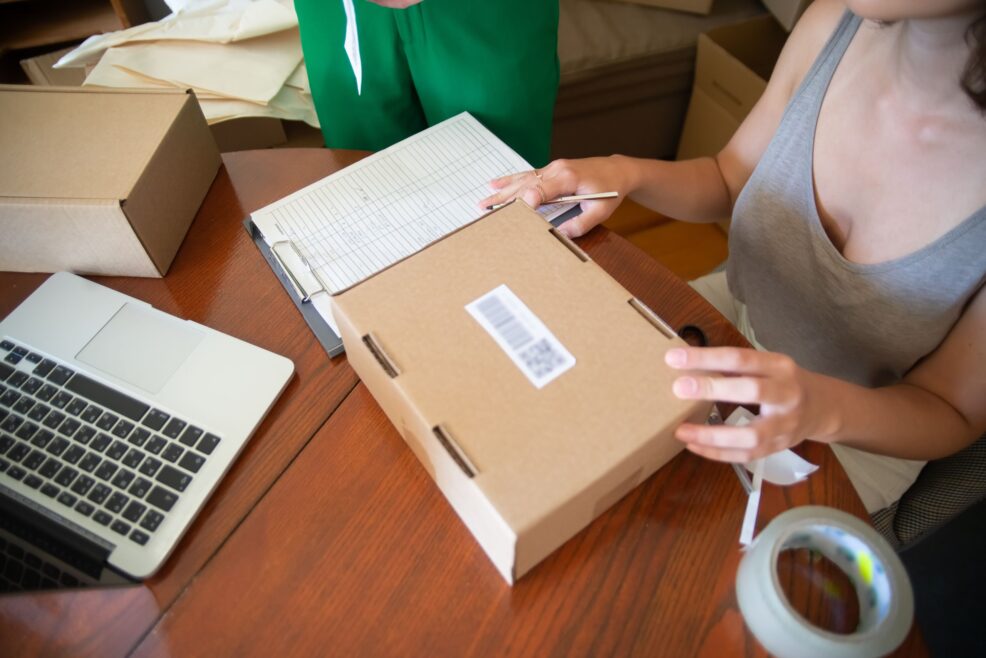
Manos preparando y precintando un pedido online junto a un portátil

Results

+20.000

products processed in every import

48

catalog reviews a day

0

technical interventions: the store team imports on its own

Tiko Doco’s product pages no longer depend on what the ERP is able to send. Brands, brand collections, logos and technical specs are now in the store, and updating them is a task the Tiko Doco team does whenever it wants, in two steps and seeing beforehand what’s going to change.

The catalog also stopped showing what it shouldn’t. Every half hour, the automatic review takes down products with no stock, no image or no rate, and puts them back on sale as soon as they’re complete again, without anyone having to keep watch.

And a task that used to require a developer with technical access to the store became a button inside the admin, with a history of every run: what was imported, when and what changed.

The ERP is still the source of truth. The app makes sure it reaches the store in full.

Let's talk

Where can your sales process grow the most?

Tell us how you attract customers, how you sell and what you want to improve. We'll assess whether you need more lead generation, AI content, CRO, an assistant, smart search or a combined solution.

Case studies